Xinhua Headlines: Influx of int'l tourists helps illuminate the real Xinjiang

* Xinjiang is emerging as a popular world-class destination thanks to China's policies that facilitate visas, payments and accommodation for inbound tourists.
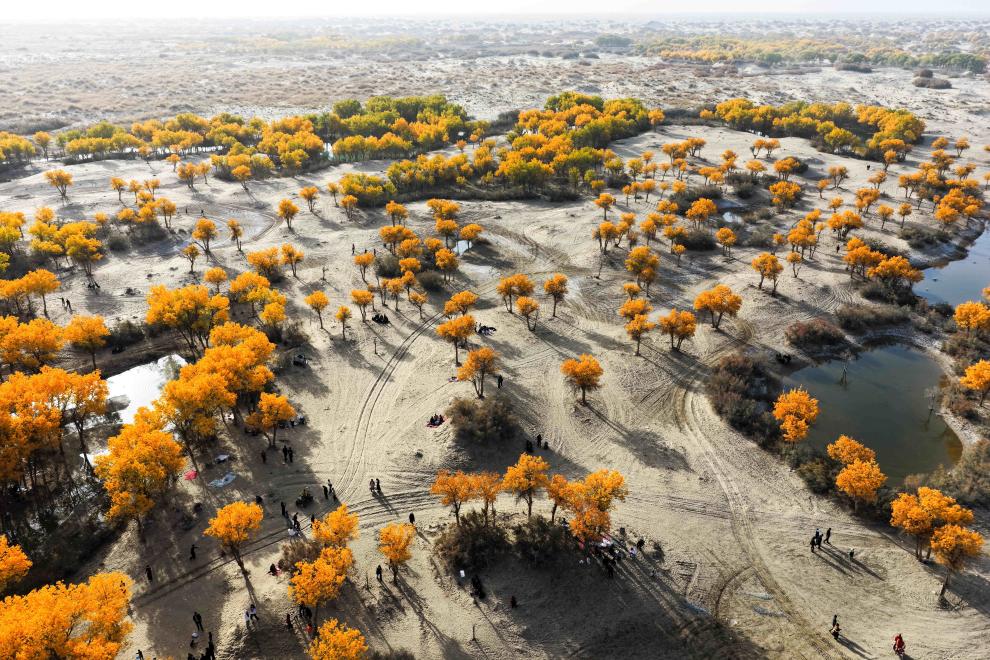
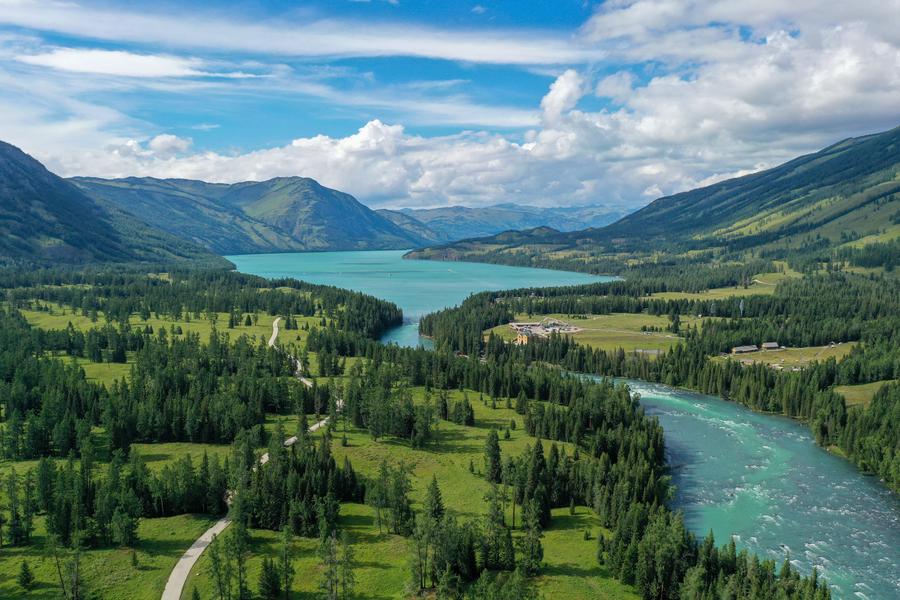
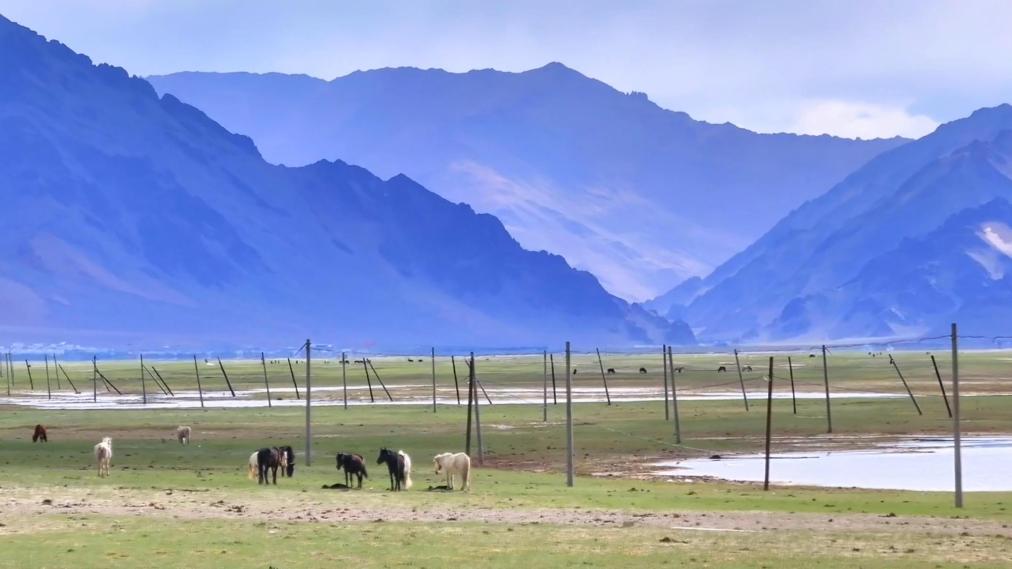
* Visitors flock to the region, drawn by its stunning natural landscapes, including snow-capped peaks and golden deserts, as well as its rich cultural heritage found in ancient streets and vibrant bazaars.
* The region aims to push annual tourist arrivals to exceed 400 million by 2030, which will mean bringing the total revenue in the cultural, tourism and sports sectors into the trillion-yuan club and creating more than 1.5 million jobs.
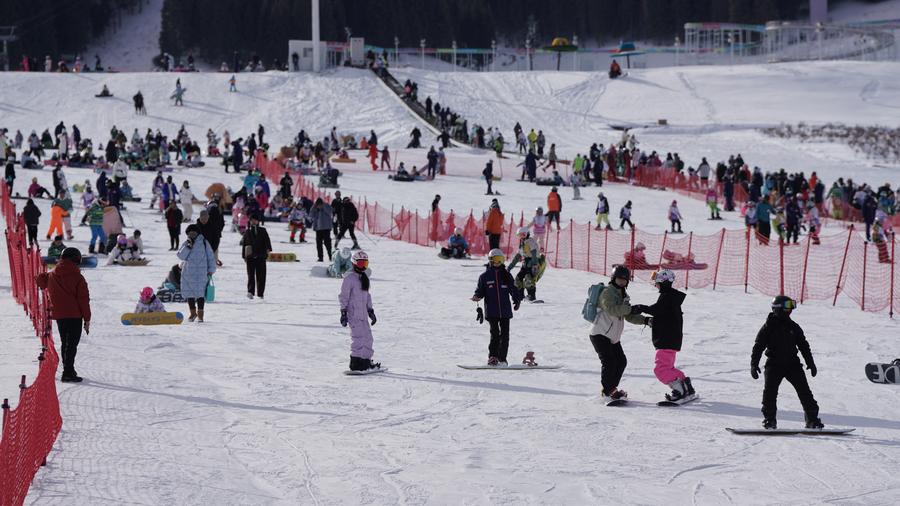
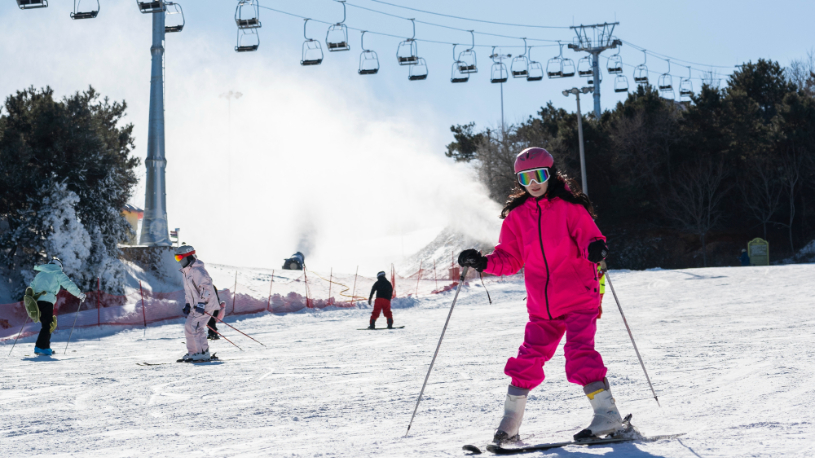
URUMQI, Dec. 3 (Xinhua) -- This winter, Nicolas de Fermor, a passionate French skier, traded the familiar for the unexpected. He set off on an inaugural journey to northwest China's Xinjiang, where a booming ice-and-snow tourism season is drawing an increasing number of international tourists.
"We came especially for the snow season," the Parisian said, catching his breath at the Silk Road Ski Resort in the suburban area of Urumqi, the regional capital. "But what surprised me most was how easy everything was -- booking with my passport, paying by phone, staff speaking fluent English. We'll definitely be coming back soon."
He's among a growing wave of international visitors discovering what government statistics confirm: Xinjiang is emerging as a popular world-class destination thanks to China's policies that facilitate visas, payments and accommodation for inbound tourists.
Xinjiang received over 2.1 million overseas tourists in the first 10 months of 2025 alone, representing a yearly increase of 6 percent. Visitors flock to the region, drawn by its stunning natural landscapes, including snow-capped peaks and golden deserts, as well as its rich cultural heritage found in ancient streets and vibrant bazaars.
"Between June and September (the peak tourist season), it's difficult to even book an English-language tour guide," said Chen Bianxia, an English-speaking tour guide with nearly two decades of experience.
Liang Changhong, general manager of China CYTS Tours Holding Co., Ltd.'s Xinjiang branch, observed that while Southeast Asian tourists prefer natural landscapes and increasingly opt for independent travel, European and American visitors are drawn by the historical cultural heritage of the ancient Silk Road.
THE REALITY CHECK
For German tourist Fabian Schiller, Xinjiang delivered constant surprises. "I expected complications, but found convenience," he said, scrolling through photos of his high-speed rail journeys.

"The train system goes everywhere and the carriages are really comfortable. But the scenery is what really does it for me, especially crossing the Gobi and the mountains. Every look out the window is like a scene from a documentary -- so stunning and calming."
Having visited Urumqi, Kashgar and Turpan, his favorite discovery was Kashgar's ancient alleys after dark, watching families grill lamb skewers beside thousand-year-old buildings while children play in the squares until late. "This sense of safety and ease I feel everywhere just blows me away," he said.
Like many Western visitors, Schiller arrived with questions. Along the journey, he had many random interactions, from learning Uygur phrases from market vendors to sharing meals with locals.
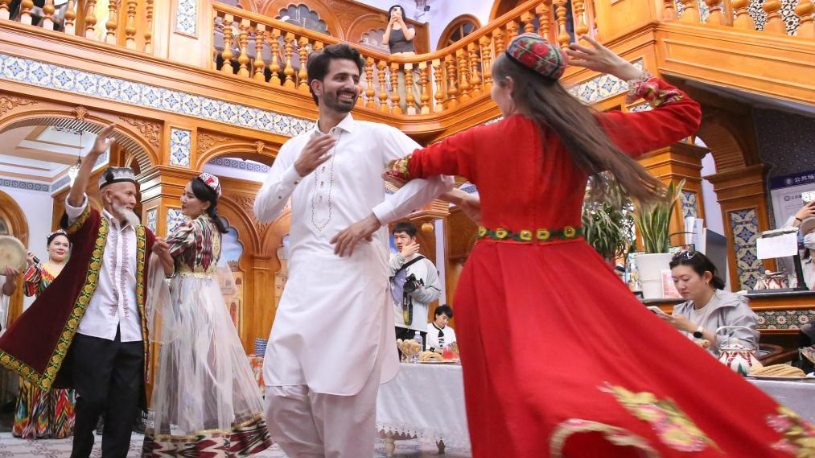
"I've talked to locals at night markets and restaurants. It seems to me that life here is quite relaxed, slower-paced than big cities but no less vibrant," Schiller said. "People are proud of their own cultures and are happy to share their understandings of local music, dance and foods."
"Many foreigners come with a 'verification' mindset, wanting to see if Xinjiang aligns with some of the descriptions given by Western media," said Yang Fuqiang, a researcher at the Xinjiang Academy of Social Sciences.
Brandon Boni, an international high school teacher from New York, first learned about Xinjiang in 2009 through a National Geographic magazine.
"I had never been to China before and I didn't even know China was comprised of multiple ethnic groups," he said. "I read the article and saw the photo (of Xinjiang) and it blew my mind. I didn't even know this was something that existed!"
Like many international visitors, Boni praises Xinjiang's thoughtful and convenient services for overseas tourists. Having lived in the region for eight years, he speaks with firsthand experience.
"I've talked to people across Xinjiang, from Kashgar to Ili to Urumqi," he shared. "Here in Urumqi, everyone leads a typical city life: living in apartments, commuting by bus, subway, or walking to work or school. And in the countryside, I've met some of the kindest and happiest people in my life."
Addressing online rumors about Xinjiang, Boni responded frankly: "Come and see for yourself. Come take a walk down the street, meet some people and see what it's really like here."
LONG-TERM INVESTMENT PAYING OFF
The take-off of Xinjiang's tourism has benefited from the government's efforts to improve the local security level, once threatened by extremism, separatism and terrorism, and years of heavy investment into the infrastructure sector.
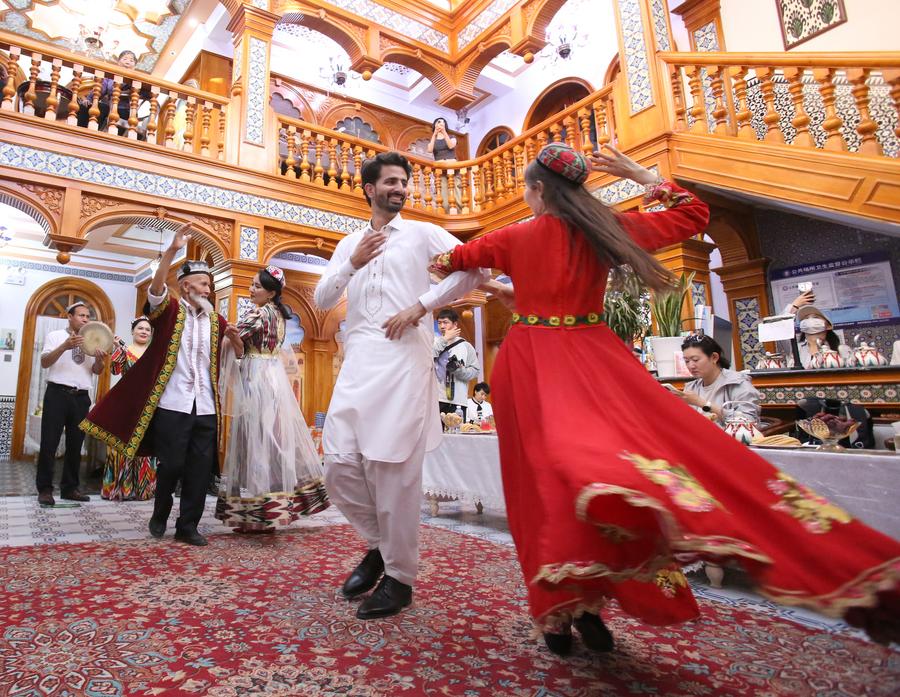
Covering one-sixth of China's landmass, Xinjiang's sheer size has always posed a challenge for exploration. However, with rapid infrastructure development, this is changing quickly. Luxury hotels are emerging alongside traditional homes in areas that were difficult to access just a decade ago, and new highways are winding through the mountains.
Over the past decade or so, Xinjiang has poured hundreds of billions of U.S. dollars into building and improving its transportation network, noted Zheng Mingquan, a senior official with the region's transportation department. "This represents the largest investment and fastest growth our transportation system has ever seen."
The Altay-Hemu Highway, for instance, has halved the travel time from Altay to Hemu to three hours. Meanwhile, a new expressway set to open by year-end is expected to reduce drive hours between Urumqi and Korla from seven to around three.
According to a newly released development plan on the region's tourism, Xinjiang aims to push annual tourist arrivals to exceed 400 million by 2030, which will mean bringing the total revenue in the cultural, tourism and sports sectors into the trillion-yuan club and creating more than 1.5 million jobs.
"Xinjiang is open and the people here are hospitable," said Erkin Tuniyaz, chairman of the regional government. "We are ready to provide the utmost convenience for friends from home and abroad to experience the real Xinjiang and to embrace its beauty."
Having become a half local, Boni chooses a single word to describe this far-western region of China: "ever-changing."
"I've witnessed Xinjiang's development over the years, and I feel it's becoming more and more open. More and more international visitors are coming to see Xinjiang's progress with their own eyes," he added.
Canadian tourist Samuel Fanning echoed Boni's words: "I planned to stay in Xinjiang seven days, but it ended up being 12 days. I think this can speak to how enjoyable it is to visit here." ■







Comments