China moves to legislate childcare services for first time, paving way for next generation's first steps

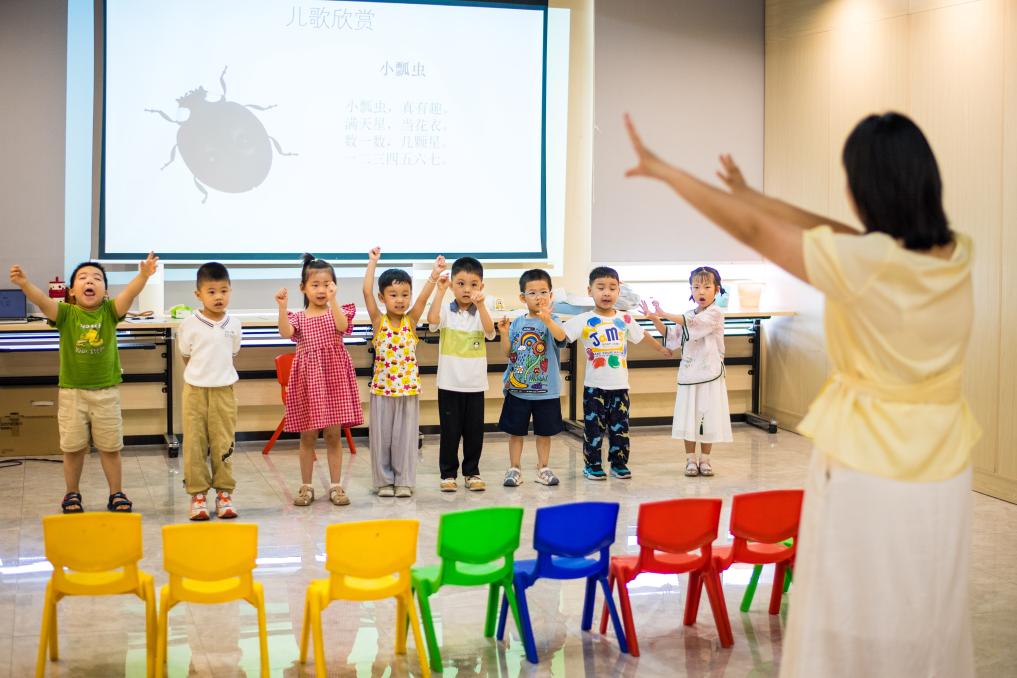
BEIJING, Dec. 22 (Xinhua) -- Chinese lawmakers on Monday began reviewing a draft law on childcare services -- the first law of its kind proposed -- designed to regulate services, enhance legal protections for children under the age of 3, and strengthen policies supporting childbirth and parenting.
The draft law builds on policy guidance with legal protections, aiming to address development bottlenecks and systematically regulate relevant services to foster a childbirth-friendly society and promote high-quality population development.
It was submitted to the ongoing session of the Standing Committee of the National People's Congress (NPC), the national legislature, for its first reading.
As family dynamics shift, many dual-income households in China are struggling to balance work and caregiving, making nursery services for children under 3 increasingly essential.
Recent official data shows that there are 126,000 childcare service institutions across the country, offering 6.66 million places. But with approximately 30 million children under the age of 3, the gap in demand is more than just palpable.
The draft initiative began in 2023, according to Luo Shugang, chairman of the NPC's Education, Science, Culture and Public Health Committee, who introduced the draft to the lawmakers.
Shortly after, extensive field visits took place across regions like Beijing and Inner Mongolia in the north, Guangdong in the south, and Heilongjiang in the northeast, offering insights into local childcare services and practices. The goal was clear: tackling the most pressing issues head-on with targeted legislation.
The draft law comprises eight chapters and 76 articles, and adopts a demand-driven, problem-focused approach to tackling key challenges in the field of childcare services, including service quality, provider qualifications, and the regulation and oversight of institutions.
It aims to expand affordable childcare options, reduce the cost of raising children, strengthen oversight, and establish a diverse, safe, high-quality, reasonably priced and accessible public childcare system, Luo said.
Should the draft become law, childcare institutions must meet various conditions, including those related to staffing, facilities, and funding, before they obtain approval from authorities.
The draft would also mandate that institutions establish a public information system, displaying key documents such as licenses, registration details, safety protocols, meal plans, fee policies, and staff qualifications and health certificates.
It proposes a national qualification exam and registration system for childcare workers, setting educational and professional standards.
A strict "blacklist" has also been outlined, barring individuals with a criminal record from working in the industry, including those with a history of violence, human trafficking, abuse, or substance abuse, as well as those who have violated ethical standards or engaged in behaviors deemed harmful to the well-being of children.
The draft also details rules related to promoting play-based activities to those banning screen time for young children and ensuring food safety. It also calls for the establishment of health management systems and enhanced disease-prevention efforts.
Additionally, it would require institutions to install video surveillance in key areas such as activity zones and food preparation spaces and to retain footage for at least 90 days.
In recent years, a series of measures have been afoot as the government increasingly focuses on population aging and declining fertility, a challenge faced by many nations.
The Chinese government has begun phasing in free preschool education, waiving care and education fees for children in their final year of kindergarten starting from the autumn semester this year. It is expected to save household spending by about 20 billion yuan (about 2.84 billion U.S. dollars) in this autumn semester alone.
According to the National Health Commission, proper care and health management during infant and toddler years are critical for early childhood development, which not only shapes individual well-being but also the country's long-term social and economic prospects.
The legislators will deliberate on the draft law during the ongoing session, which runs from Monday to Saturday. ■










Comments