by Xie Meihua
HONG KONG, Dec. 26 (Xinhua) -- The year 2018 marks the 15th anniversary of the establishment of strategic partnership between China and the Association of Southeast Asian Nations (ASEAN) featured with political trust, mutual respect and win-win cooperation.
The two sides have pledged to further develop their relations to a new high by adopting the China-ASEAN Strategic Partnership Vision 2030 last month, which is widely seen as a role model for cooperation in the Asia-Pacific region.
CHINA-ASEAN STRATEGIC PARTNERSHIP A BOON TO ASIA-PACIFIC
In 2003, China and ASEAN decided to establish their strategic partnership, ringing in a new chapter in their relations. Over the past 15 years, the partnership has endured a changing international landscape and their cooperation has continued to deliver real benefits to the countries and the peoples of the region.
China and ASEAN are firmly committed to good-neighborliness and friendship while enhancing political and security ties to create stability across the Asia-Pacific.
Under this partnership, the two sides have properly managed sensitive issues and disputes through dialogue and negotiation in order to keep their relationship on track.
After earnestly implementing the Declaration on the Conduct of Parties in the South China Sea (DOC), China and ASEAN arrived at a single draft negotiating text of the Code of Conduct (COC) in the South China Sea in August this year. Tensions in the South China Sea have significantly cooled down, generating positive regional momentum.
Breakthroughs have also been made in maritime cooperation. The two sides held their first ever large-scale joint exercises on maritime search and rescue in October 2017 and first-ever maritime drills in October this year.
China and ASEAN have promoted trade and investment liberalization, an approach that has provided the backbone and engine for development and prosperity in the region.
The China-ASEAN Free Trade Area (FTA), the largest regional FTA in the world in terms of population, went into effect in 2010, removing tariffs on more than 90 percent of goods traded between China and 10 ASEAN members - Indonesia, Malaysia, the Philippines, Singapore, Thailand, Brunei, Cambodia, Laos, Myanmar and Vietnam.
Moreover, an updated FTA was hammered out late in 2015, further facilitating trade, scaling up bilateral investment and encouraging technological cooperation.
China and ASEAN are now working together to speed up negotiations of the Regional Comprehensive Economic Partnership (RCEP), a proposed free trade area made up of the 10 ASEAN member states and its six FTA partners -- China, Australia, India, Japan, South Korea and New Zealand, in order to further facilitate trade and investment in the region.
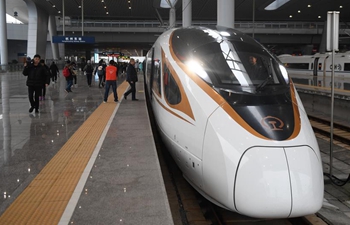
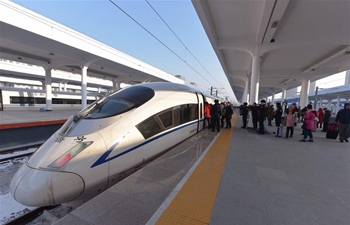
Based on the principle of collaboration, China and ASEAN have worked to align the former's Belt and Road Initiative with the latter's development plans. Connectivity projects include the China-Laos Railway, the China-Thailand high-speed railway, and Indonesia's Jakarta-Bandung high-speed railway.
China and ASEAN have also advocated people-to-people exchanges and mutual learning among their different and numerous civilizations. Ties have rapidly developed in the areas of culture, education, tourism, media, science and technology, environmental protection, disaster relief, poverty reduction and youth, among others.
BLUEPRINT FOR DEEPER STRATEGIC PARTNERSHIP, WIDER PRAGMATIC COOPERATION
China and ASEAN adopted last month a blueprint to further advance their strategic partnership and forge wider mutual beneficial cooperation so as to build a closer China-ASEAN community with a shared future.
The vision is a new cooperation framework between China and ASEAN, underpinned by the three pillars of political and security cooperation, economic cooperation and people-to-people exchange, and supported by cooperation in mutually-agreed areas.
To enhance political and security ties to further build mutual trust, the two sides emphasized respect for each other's national conditions and development paths, and promised to promote understanding through dialogue, confidence-building measures and cooperation in defence, security, non-traditional security and transnational threats.
China and ASEAN reaffirmed their commitment to maintain and create peace, security, stability and safety in the South China Sea, fully and effectively implement the DOC, and working towards the early conclusion and adoption of the COC in the South China Sea based on consensus.
As the backbone and engine for promoting development and prosperity in the region, China and ASEAN hailed the continued strong growth in bilateral trade, investment and tourism flows.
The two sides have pledged to intensify efforts to meet the joint target of 1 trillion U.S. dollars in trade volume and 150 billion dollars in investment by 2020 through deepening economic linkages and improving connectivity with an eye on more fruitful results in trade and investment by 2030.
They also remained committed to intensifying efforts to finalize negotiations for a modern, comprehensive, high-quality and mutually-beneficial RCEP agreement, boosting physical and institutional connectivity to bring markets closer together, deepening financial cooperation, enhancing dialogue and exchanges in maritime economic cooperation, engaging in the process of economic globalization and facilitating further economic integration, among others.
While encouraging people-to-people exchanges and cooperation between them for a better future, the two sides said they would promote youth exchanges in the fields of language learning, culture, art and heritage. They would also strengthen cooperation in environmental protection, water resources management, sustainable development and climate change, and promote policy communication among governments.
PLEDGES TO BOOST COOPERATION UNDER SUB-REGIONAL FRAMEWORK
Proposed by China in 2014 among six countries along the Lancang-Mekong River - Cambodia, China, Laos, Myanmar, Thailand and Vietnam, the Lancang-Mekong Cooperation (LMC) has become one of the most prominent sub-regional frameworks.
At "the fourth Mekong-Lancang Cooperation Foreign Ministers' Meeting" held in Laos in mid December this year, the six LMC countries pledged to further deepen their cooperation within the framework of the mechanism to achieve inclusive and sustainable development in the sub-region by identifying development directions for future cooperation.
Addressing a press conference following the meeting, Chinese State Councilor and Foreign Minister Wang Yi said the six development directions include jointly building LMC Economic Development Belt, carrying out cooperation on production capacity, enhancing innovation cooperation, giving priority to improvement of people's livelihood, deepening environmental protection, and upholding openness and inclusiveness.
In a joint press communique released after the meeting, the six riparian countries, while underlining the vital need of upholding an open world economy and the rules-based multilateral trading system, reaffirmed that the LMC would be based on the principles of consensus, equality, mutual consultation and cooperation, voluntarism, common contribution and share benefits.
They also agreed to promote the synergy of national development strategies, bring into full play resource endowment and competitive advantage, promote rational flow and optimal allocation of production factors, and start discussion on concretization of jointly building a LMC Economic Development Belt for mutual benefit and shared prosperity.