



Shenzhen, a city in south China's Guangdong province, has become a wonderland for start-ups and a design hub. Jamie Salter, who grew up in London and studied in Cambridge, has his dream come true in the city known as the "Silicon Valley of China."
by Xinhua writer Gao Wencheng
BEIJING, Dec. 19 (Xinhua) -- Jamie Salter grew up in London and studied in Cambridge. But it was Shenzhen, a city in south China's Guangdong province known as the "Silicon Valley of China" that made his dream a reality.
"I don't just stay in London or go to San Francisco" because "if you care about speed and you need quality, then Shenzhen has the supply chain and the network and experience already," said Salter, a vice president with hardware startup Carv.
Once a small fishing town, Shenzhen, after four decades of reform and opening-up, has gradually become a global hardware center and hub for scientific and technological advances, where skyscrapers appear commonplace and the population has surged past 13 million.
Like Salter, every foreign resident living in Shenzhen has their reason for staying.
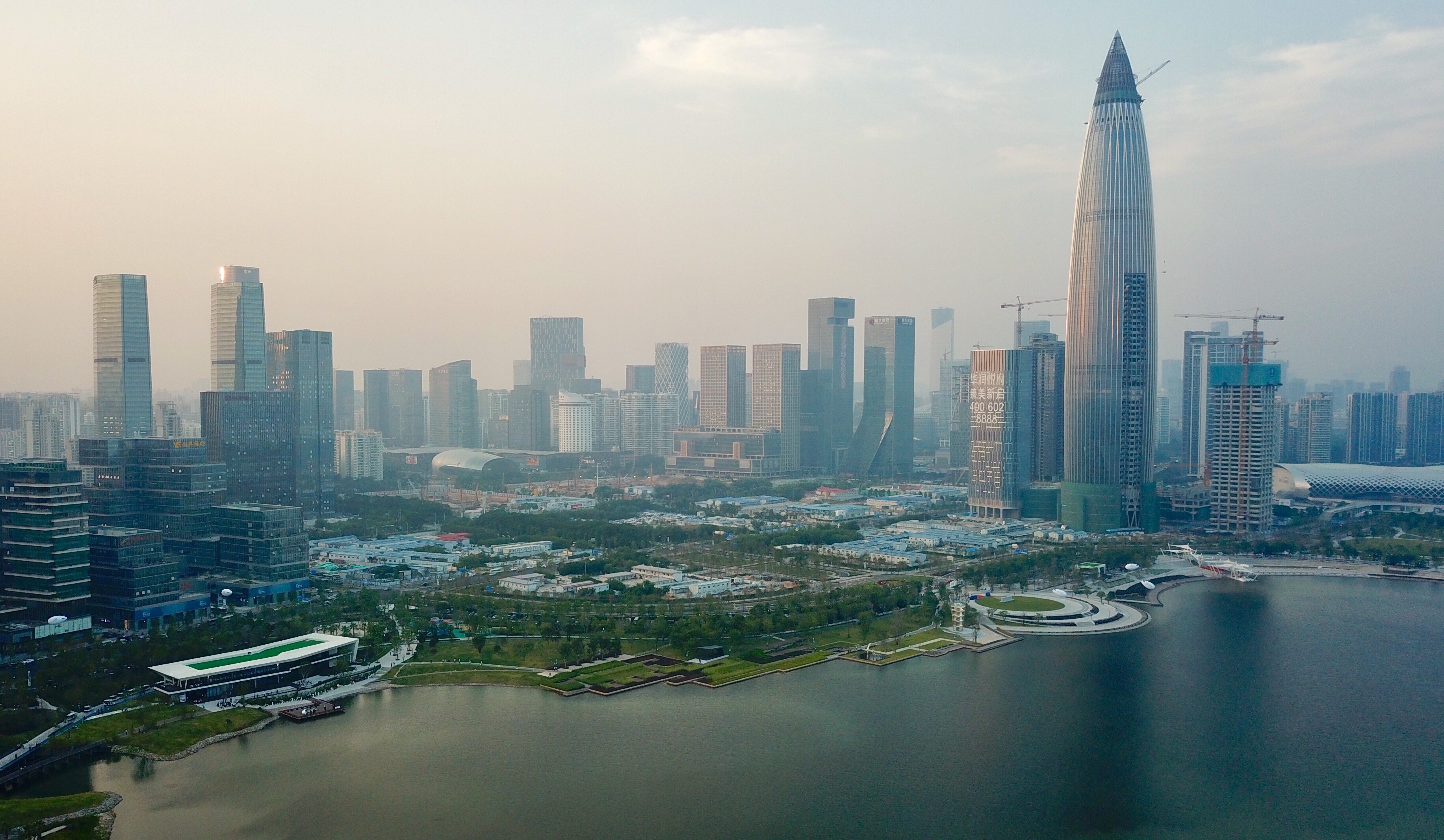
Photo taken on Nov. 1, 2017 shows the Shenzhen Talent park in Shenzhen, south China's Guangdong Province. (Xinhua/Mao Siqian)
WONDERLAND FOR START-UPS
When the young British entrepreneur came to Shenzhen for the first time, he was blown away by the heightened differences compared to home.
"Crazy new technology is moving around and there are loads of people, and it's always busy," he added.
His destination upon arrival is HAX, an American company investing in hardware start-ups based in the city and San Francisco.
The workshop is divided up into open-plan offices where young entrepreneurs like Salter are hard at work developing their first prototypes, using components from the electronic market just downstairs.
Nikita Iliushkin, another HAX protege from Canada, who is currently working on a new type of drone, pointed out the advantages of Shenzhen for fledgling companies.
"Here all the various suppliers work much, much faster," Iliushkin said. "We are able to iterate so much faster being here."
"One week in Shenzhen is like one month everywhere else," he said.
Today, Shenzhen is known for its hardware expertise, thanks to its huge number of factories and resellers. It also has one of the world's most developed hardware industry chains and abundant intellectual capital.
"As a hardware start-up, you don't have much money, and partly because of that, you do not have much time, you need to get to market quickly," Salter said, "so the best place to do that is, without a doubt, Shenzhen."
His company now has devised a digital sports coach that analyzes skiing techniques in real-time providing feedback on the slopes.
With China's successful bidding for the 2022 Winter Olympic Games and the country's plans to encourage "300 million people to join in ice and snow sports," Salter dreams bigger in China.
"Chinese skiing would be a real potential for us," he said.
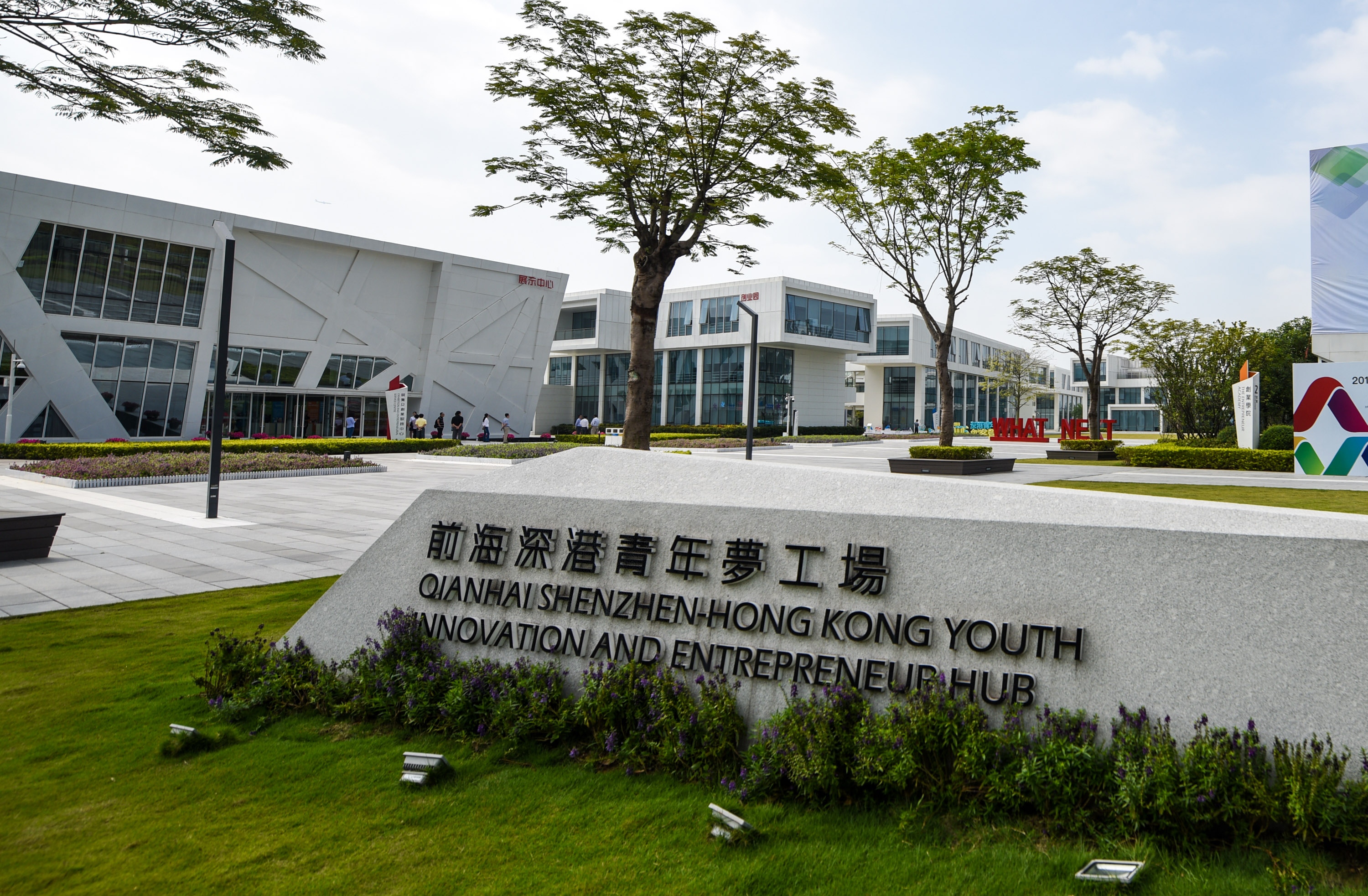
Photo taken on Oct. 10, 2016 shows the Qianhai Shenzhen-Hong Kong Youth Innovation and Entrepreneur Hub in Shenzhen, south China's Guangdong Province. (Xinhua/Mao Siqian)
DESIGN HUB
Wolfgang Egger, a world-famous German car designer, is also building his dreams with BYD, a Shenzhen-headquartered electric vehicle maker.
Sitting in the BYD global design center, Egger, who proposed building the center, said that as a designer with experience in different companies and brands, "to have this opportunity to create something like this from nothing is a big challenge that I need."
That is the main reason why he joined the Chinese car manufacturer three years ago.
At that time, the "electric car trend in the rest of the world was not so strong" while China was "a leader," Egger said.
"I was looking to really do a project on the identity and on the electrical future," he said. "BYD is the best option I could have."
At the Shanghai International Automobile Industry Exhibition in April, BYD debuted its E-SEED GT electric concept car with a "Dragon Face" design.
Such details as "dragon-scale" features on the car's door panels, headlights resembling "dragon whiskers," and a "dragon ridge" on its roof and tail, were inspired by a symbol of dragons in China's Hongshan culture that dates back thousands of years.
Behind the eye-catching design is Egger and his team's desire to "look for inspiration for the brand's identity in Chinese culture."
A voracious reader of Chinese traditional tales, BYD named several of its car lines after dynasties in Chinese history.
The city of Shenzhen was also designated as a United Nations Educational, Scientific and Cultural Organization (UNESCO) City of Design in 2008, the first of its kind in China.
"The concept of modern Chinese design was gradually created in Shenzhen and has increasingly become a part of the city residents' lives," the UNESCO said on its website.
"From my point of view, Shenzhen could be, (and) should be the design capital in China," Egger said, adding all the elements are present, including technology, young people and emerging trends.
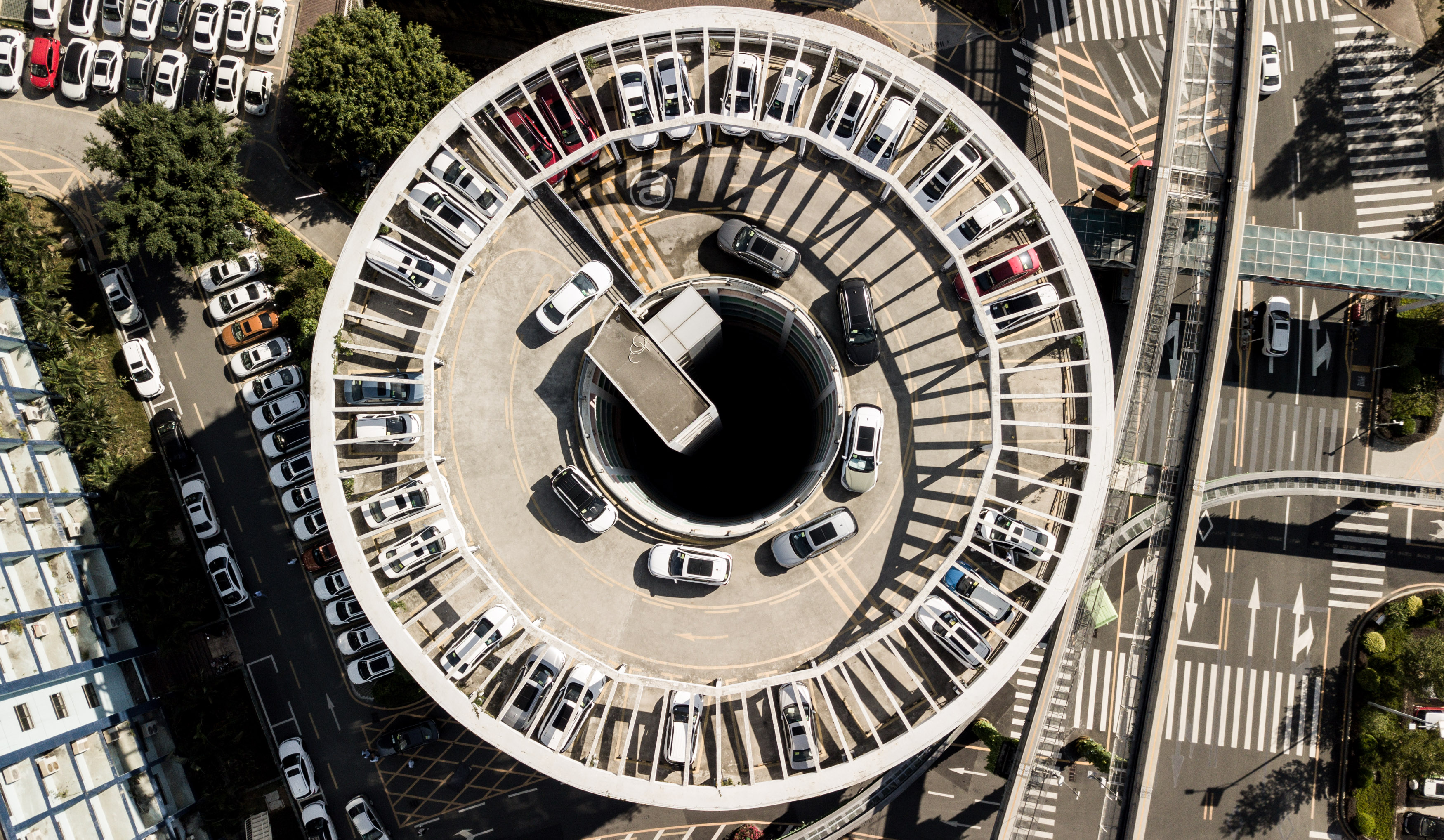
Aerial photo taken on Nov. 30, 2018 shows a "charging tower" for electric vehicles at the headquarters of China's new energy vehicle maker BYD in Shenzhen, south China's Guangdong Province. (Xinhua/Mao Siqian)
NEW MISSION
In August, Shenzhen, the trailblazer in China's reform and opening-up, received a new mission: to create a pilot demonstration area of socialism with Chinese characteristics.
The southern Chinese city, one of China's first special economic zones set up in 1980, has since been widely dubbed the "Miracle of Shenzhen."
Official data showed that Shenzhen's gross domestic product (GDP) was only 196 million yuan (about 28 million U.S. dollars) in 1979, one year after China initiated reform and opening-up. In 2018, it soared to over 2.4 trillion yuan (about 343 billion dollars).
Shenzhen's embrace with the world has helped the city grab the tail of globalization.
The first Walmart-owned Sam's Club store on the Chinese mainland, which was opened in Shenzhen in 1996, has become the top Sam's Club store globally since 2008.
Globalization also enables international talent to work and live in such fast-developing cities like Shenzhen.
At least five Nobel laureates have set up their research institutes in Shenzhen. Among them, Arieh Warshel, a Nobel laureate in chemistry in 2013, said "Shenzhen has a lot of high technologies which allow you in principle to innovate and collaborate, (and) a lot of resources which help innovation."
James Corner, a landscape architect and urban designer who once participated in planning the city, said Shenzhen is moving to "create a modern 21st-century city, a city that combines new technologies and dense forms of buildings and programs with human-scale streets and blocks, integrated with green natural systems, parks and open spaces."
Shenzhen is attracting more capital and talent, becoming a model of development for other Chinese cities and even the world.
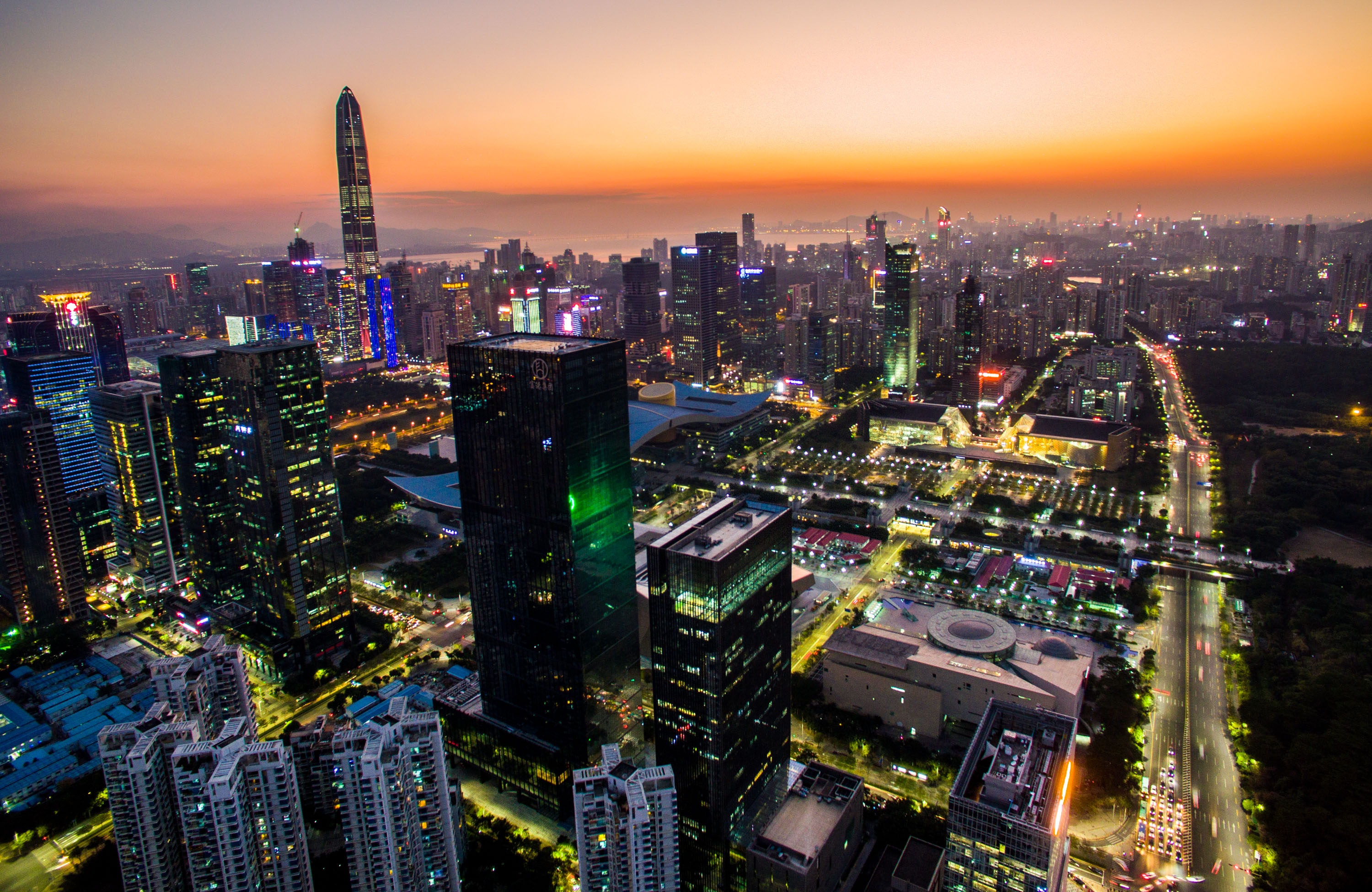
Aerial photo taken on Feb. 14, 2017 shows a night view in central Shenzhen, south China's Guangdong Province. (Xinhua/Mao Siqian)
In the first three quarters of 2019, Shenzhen's foreign investment increased by nearly 90 percent year on year.
This year, multinational companies including European aerospace giant Airbus, global management firm Boston Consulting Group, and tech-minded professional services firm Accenture, have set up shop in Shenzhen.
Shenzhen is also expected to play a global role in creating standards for institutional design, particularly in Qianhai, a Shenzhen-Hong Kong pilot cooperation zone in Shenzhen. Qianhai in September launched a pilot program to reduce the approval time for setting up businesses from one day to less than a minute.
With such fundamental innovations, Shenzhen could set global standards for years to come.
(Video reporters: Sui Lixi, Li Guangzheng, Wang Qi, Li Sijia, Wu Yanting, Chen Yuxuan, Wu Xiaoling, Ye Zaiqi, Deng Min, Jiang Le, Qian zheng)
